
How to Sleep Better in Late Pregnancy
Simple positioning and relaxation techniques to find comfort
If you’re in your third trimester and struggling to sleep, you’re not alone.
Difficulty sleeping in late pregnancy is one of the most common concerns from expecting moms.
As your body changes and your baby grows, comfort becomes harder to find. Frequent bathroom trips, back pain, hip pressure, and a busy mind can all make rest feel impossible.
The good news? Small adjustments can make a big difference.
Why Sleep Gets Harder in the Third Trimester
During late pregnancy, your body is working overtime. Hormonal shifts, increased abdominal size, and physical pressure on your spine and pelvis can disrupt your normal sleep cycle.
Common causes of third trimester sleep problems include:
- Lower back and pelvic discomfort
- Leg cramps
- Heartburn
- Frequent urination
- Anxiety about labor and birth
Understanding what’s happening in your body is the first step toward improving your rest.
1. The Best Sleep Position in Late Pregnancy
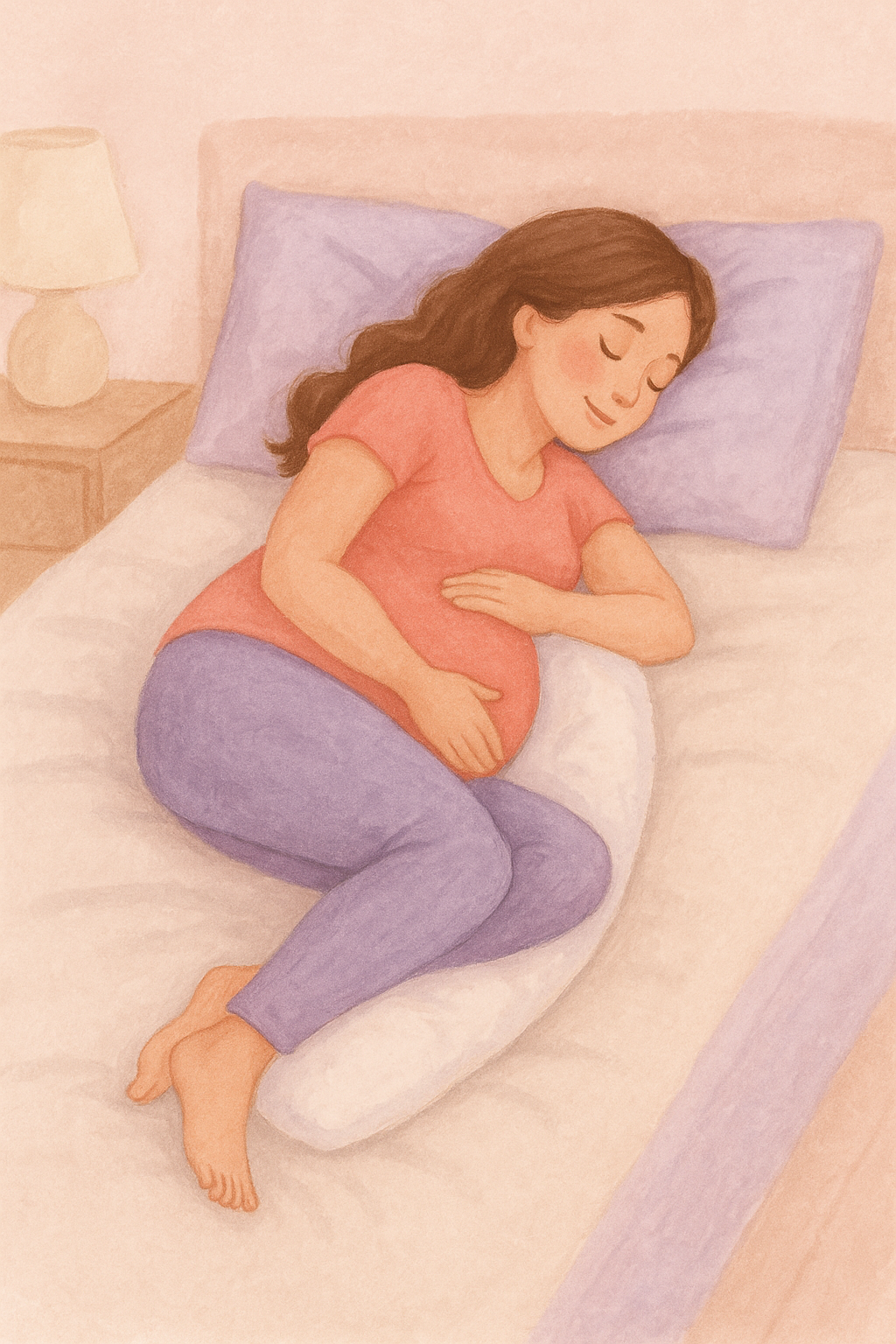
The safest and most comfortable position during late pregnancy is side-lying, preferably on your left side.
Why the left side?
Sleeping on your left improves blood flow to the placenta and helps reduce pressure on major blood vessels. It can also decrease swelling in your legs and feet.
Try this positioning setup:
- Place a pillow between your knees
- Add a small pillow under your belly for support
- Put a pillow behind your back to prevent rolling
- If needed, hug a pillow to keep your shoulders aligned
This reduces tension in the hips and lower back and keeps your spine in a neutral position.
2. Support Your Pelvis and Lower Back
In late pregnancy, the hormone relaxin increases joint mobility. While this prepares your body for birth, it can also create instability in the pelvis.
To reduce discomfort:
- Keep your knees slightly bent
- Avoid twisting when turning in bed
- Move your body as one unit when changing sides
- Engage your core gently before rolling over
These small biomechanical adjustments can significantly reduce nighttime pain.
3. Calm Your Nervous System Before Bed
Many sleep issues in late pregnancy aren’t just physical, they’re mental.
Worries about labor, baby’s health, or the unknown can activate your stress response, making it harder to fall asleep.
Simple relaxation techniques can help.
Deep Breathing
Inhale slowly through your nose for 4 counts.
Exhale gently for 6 to 8 counts.
Repeat for 2 to 3 minutes.
Longer exhalations activate the parasympathetic nervous system, your body’s natural relaxation response.
Progressive Muscle Relaxation
Gently tense and release different muscle groups from feet to head. This helps your body recognize and release tension.
Guided Visualization
Imagine a calm birth environment. Picture yourself breathing steadily and feeling supported. Mental rehearsal builds confidence and reduces anxiety.
4. Create a Night Routine That Signals Safety
Your brain needs cues that it’s safe to relax.
Try to:
- Dim lights 60 minutes before bed
- Avoid screens at least 30 minutes before sleep
- Keep your bedroom cool and dark
- Go to bed at a consistent time
Consistency trains your nervous system to wind down more easily.
5. When Sleep Problems Signal Something More
Occasional sleep disruption is normal. However, speak with your healthcare provider if you experience:
- Severe snoring with breathing pauses
- Intense itching that keeps you awake
- Persistent insomnia affecting daily functioning
Sleep is not a luxury in pregnancy, it’s essential preparation for labor and postpartum recovery.
Preparing Your Body for Rest Also Prepares You for Birth
Learning how to position your body, regulate your breathing, and calm your nervous system doesn’t just improve sleep.
These same techniques support you during labor.
In my online childbirth class, I guide you step-by-step through evidence-based positioning, breathing strategies, and body awareness techniques that help you feel prepared, not overwhelmed, as birth approaches.
Because preparation begins long before contractions start.
If you’re ready to enter birth calm and in control, you can learn more here.